Pema Chodron, When Things Fall Apart
sepia oilcans & trivial miseries

“You just get a good one and then he or she is gone.”
A problem, or anyway a peculiarity, about studying creative writing is that you don’t, at the end of it, know anything new. Or at least not anything that you could write down on an index card. There isn’t a quadratic equation for novel-writing; there’s just a hazy deepening familiarity with what good work smells like. Your parents ask you at the end of a semester what you learned and you gesture pitifully at a pile of pages that you hate — but at least you now know to hate them!
I do, though, remember one particular lesson. It’s just about the only one I remember. I was in eleventh grade and the teacher had us go around the room and each name an item in a garage. We were describing a garage in a story, was the idea, and we needed a detail to bring it to life.
A broom, one of us said. An oilcan. A grease spot. A rake.
The teacher nodded at each attempt, but we were scraping away at a lock with an entire ring full of the wrong keys, we could feel it.
And then a girl who barely ever spoke said, A package of granola bars from Costco?
And our teacher’s face changed; the door unlocked.
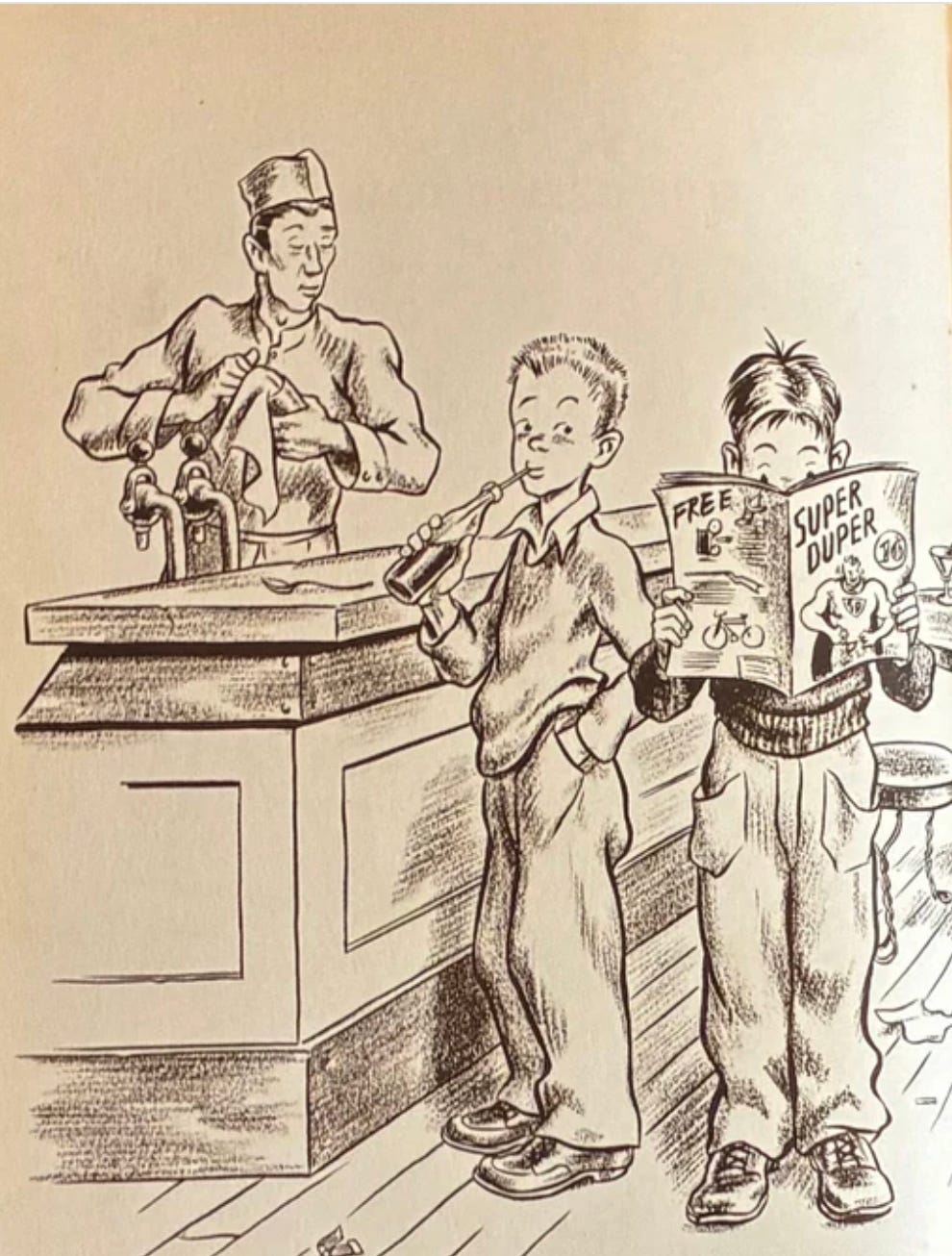
Why was her answer so much better than ours? Why did the garage remain a flat and sepia thing — like a pencil illustration in Homer Price — no matter how many garden tools and oily rags we flung at it, but then burst into sensory inhabitability with the addition of a package of granola bars?
Well, the things we were putting into it were bullshit. The granola bars were true. We had merely typed garage into our mental emoji-search-bars and reported on the handful of use-deadened images that came up. She had instead taken a moment to walk into her actual garage, imaginatively, without worrying about whether what she saw would appear on the Family Feud Top Five Things You Find in a Garage list. And she had looked around.
And so I learned something: a good detail is one that you fear is so specific, so idiosyncratic and contingent, that it will make sense only to you. Or: specificity x honesty = universality.
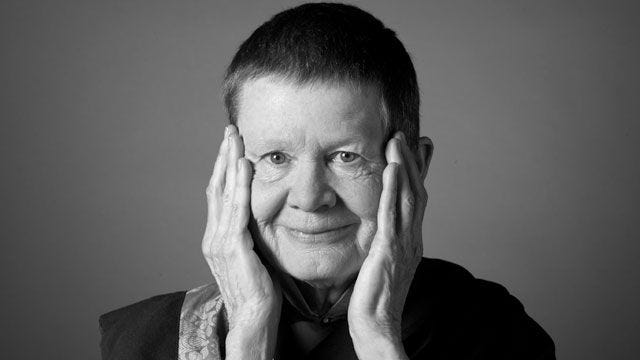
Pema Chodron — in addition to all that she knows about Tibetan Buddhism and writing bestselling books and living comfortably with dread and uncertainty — knows this equation.
Before I get into it: Chodron is an American-born Buddhist nun. She grew up on the East coast in the 30’s and 40’s, went to Sarah Lawrence, got married and had a couple of kids. And then her life fell apart (a divorce, a remarriage, another divorce) and she fled, or ascended, into the embrace of a particularly rich and elaborate form of Buddhism. And she began to teach. And her teachings were periodically gathered into skinny little books, between whose covers hundreds of thousands of people — including me, including people who don’t know Tonglen from a t-shirt — have found wisdom and consolation.
Midway through her best and most famous book, When Things Fall Apart, Chodron is riffing, with characteristic humor and cheer, on the themes of hopelessness and death.
We long to have some reliable, comfortable ground under our feet, but we’ve tried a thousand ways to hide and a thousand ways to tie up all the loose ends, and the ground just keeps moving under us.
Only by giving up the hope that we will ever achieve some lasting and reliable comfort, Chodron believes, will we ever enjoy our lives. We happen to be born in a wave pool — we can either clench and curse and try to slap the water calm, or we can learn to bob.
There are, of course, infinite examples that Chodron could reach for, when seeking to illustrate the basic unsatisfactoriness of things. She could bring up illness, or heartbreak, or aging, or death — the universe buys its troubles at Costco.
But here is what she actually grabs:
Theism [i.e. refusing to accept the hopelessness of things] is a deep-seated conviction that there’s some hand to hold… It means thinking there’s always going to be a babysitter when we need one.
And at first we think — because her books, transcribed from talks, have a certain conversational blur — that maybe she means some sort of cosmic babysitter? As in someone to take care of us?
And then on the next page she writes:
Nontheism is finally realizing that there’s no babysitter you can count on.
And we think, Huh, she’s really liking this babysitter image.
But then we come to the very next sentence:
You just get a good one and then he or she is gone.
And finally we realize: she isn’t talking about a cosmic babysitter! She’s talking about the babysitter saved in your Contacts, the one who moved to California to pursue acting but who you haven’t deleted yet because she was so good and didn’t she say she’d be back over Christmas or something? With an entire cosmos of miseries to choose from, she went with one so trivial, so flimsy and first-world and modern, that you would hesitate to bring it up at carpool, let alone in a one-on-one with the Buddha.
And yet — because we can feel beneath it the tug of actual experience; because we can see Pema the single mother sighing beside a phone and a calendar of ruined plans — we are convinced by it, we are brought into fresh contact with one of reality’s thorns. She has, by risking expulsion from the Fellowship of Significant Buddhist Teachers, found a place on our skins that has not yet been calloused by repeated exposure (hmm, yes, dust to dust, how unfortunate, now where are people going after the service?).
So yes: human existence is a fundamentally hopeless affair, I am ready now to sign on the dotted line. But I also know, because of that moment of eye contact regarding babysitters, that I am not alone in bumping again and again, in realms trifling and weighty, against the unbearability of things.
Which helps me bear it.

What TR said.
My day always gets better when I see an email from you. Thank you for this.